
A Historic Achievement, A Continued Commitment to Ending Veteran Homelessness
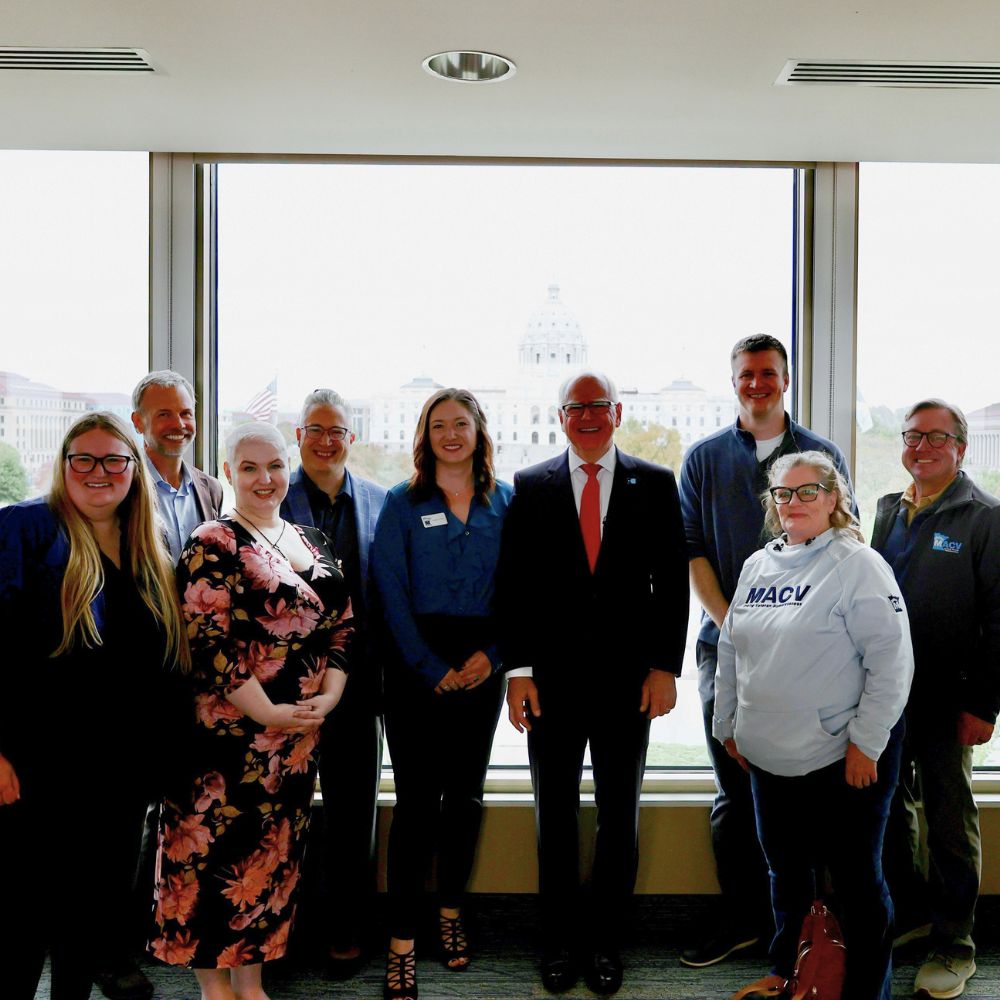

Minnesota has reached a historic milestone in the effort to end Veteran homelessness. With Ramsey County meeting the benchmarks to declare the effective end of Veteran homelessness, every county in Minnesota has now achieved this designation, making Minnesota the fourth state in the nation to reach this milestone.
Governor Tim Walz joined Veterans, community partners, and state and local leaders at MACV’s Veteran Village in Eagan to recognize this achievement and the years of collaboration that made it possible.
Among those participating in the celebration included Commissioner Brad Lindsey of the Minnesota Department of Veterans Affairs, Cathy ten Broeke, Assistant Commissioner and Executive Director of the Minnesota Interagency Council on Homelessness, Minnesota Housing Commissioner Jennifer Ho, Ramsey County District 4 Commissioner Rena Moran, and Army Veteran Todd Smith. MACV’s facility dog, Lenny, also joined the historic occasion, welcoming guests to Veteran Village.
This milestone reflects years of coordinated work among MACV, government agencies, housing providers, community organizations, and Veterans. A critical part of this work is the By Name List, a shared tool that helps partners identify Veterans experiencing homelessness, understand their individual circumstances, coordinate services, and track progress toward housing stability. By working from a shared understanding of who is experiencing homelessness, communities can respond more effectively and help ensure Veterans do not fall through the cracks.
Across Minnesota, these partnerships and coordinated systems have strengthened efforts to connect Veterans to housing, prevent homelessness whenever possible, and respond quickly when housing instability occurs.
Reaching the effective end of Veteran homelessness does not mean that Veterans will never experience homelessness again. Rather, it means communities have established an effective response system where Veteran homelessness is rare, brief, and unlikely to recur. When a Veteran faces a housing crisis, resources and partnerships are in place to help them regain stability.
For MACV, this achievement reflects the importance of working across individual, regional, and statewide levels. From direct outreach and housing services to partnerships with local communities and state agencies, ending Veteran homelessness requires a coordinated effort that extends far beyond any single organization. Equally important is the commitment to sustaining long-term stability, ensuring Veterans not only find housing but also have access to the resources, relationships, and services that help them maintain it.
This is a milestone, not a finish line. Sustaining this progress will require continued investment, strong partnerships, and a shared commitment to preventing future housing crises and helping Veterans maintain long-term stability. MACV is proud to celebrate this historic achievement alongside the many partners who made it possible. Together, we remain committed to sustaining this progress.